


- INTERVIEW
Interview with El País
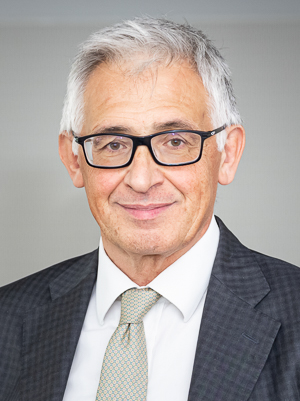
Interview with Piero Cipollone, Member of the Executive Board of the ECB, conducted by Manuel V. Gomez on 22 January 2026
28 January 2026
The ECB has used the current complex geopolitical situation as an argument in defence of the digital euro. Do you think that the events we’ve seen this year, such as Venezuela and Greenland, strengthen this case?
Put like that, it sounds like we are introducing the digital euro as a defensive measure against something or someone. That isn’t really correct. The ECB is mandated to provide means of payment and promote the smooth functioning of the payments system. Looking at the situation in Europe, we might ask ourselves whether these two requirements are met, or whether the payments system is so fragmented that we don’t have a digital way to pay seamlessly across Europe without relying on non-European providers. We might also ask if that system is resilient.
We provide both retail and wholesale payment methods. At the retail level, we offer cash – but it doesn’t fully cover people’s needs, because it can’t be used to pay digitally. For instance, it can’t be used in e-commerce, which now accounts for more than a third of day-to-day transactions in value terms. We are trying to fill these gaps by complementing banknotes and coins with a digital form of cash.
And yet this is nothing new.
No, but ten years ago it was less problematic. Cash was king, and it met almost all your needs, so the need to provide additional payment methods was not quite so pressing. But technological advances have changed our payment habits. The ability to use central bank money for retail transactions is declining rapidly: in 2024 cash accounted for 24% of day-to-day transactions in value terms, down from 40% in 2019. So all we are doing is adapting – rethinking how we give people the means to pay in this new environment.
But there is a “defensive” or geostrategic dimension to this.
All these potential geopolitical tensions and the weaponisation of every conceivable tool clearly increase the level of risk. This reinforces the case for a European payment system that can meet all our payment needs and is built on European technology and infrastructure, in other words, a system that is fully under our control.
That is what we are doing with the digital euro. People can then decide for themselves whether to use it and how they balance that with private payment solutions. That is not for us to decide. But it is our responsibility to provide a means of payment that meets the needs of Europeans and avoids excessive dependencies.
In short, the digital euro is about safeguarding money as a public good.
Absolutely. It is public money in digital form.
Some voices in the European Parliament and in the private sector are calling for the payment system to be developed, but waiting for the banking sector to develop an alternative.
That’s the proposal put forward by the rapporteur in the Parliament. We’ve been calling on the private sector to come up with a pan-European solution for many years now. We are pleased that attempts are being made to integrate different solutions, as we believe this would strengthen the systemic resilience I mentioned earlier. We also believe that the digital euro will mean the private sector is more likely to develop a pan-European system.
Why?
The digital euro will be legal tender. Any merchant that currently accepts digital payments will have to accept the digital euro. But it will also mean that there will be a single, public standard accepted by all European merchants. Currently, when a payment service provider (a bank or fintech firm) provides services to a merchant, the merchant has to sign up to its standards. As a result, the more standards there are, the more fragmented things become. With the digital euro, there will be one single, open standard, which will also be available for the private sector.
What do you make of the suggestion that the digital euro only be offered in offline mode?
One of the problems we are looking to solve with the digital euro is the lack of a viable European payment method for e-commerce. How can an offline solution be used to pay in the e-commerce space? I don’t know.
The Chair of the Federal Reserve, Jerome Powell, has seen his independence come under threat. President Lagarde and other governors have come out in his defence. Do you think these highly unusual attacks might have an impact on monetary policy?
We are the central bank of the euro area, not the United States. We look at the euro area economy and set our interest rates so that we can maintain price stability, aiming for 2% inflation over the medium term. What happens elsewhere in the world matters insofar as it matters for inflation in the euro area. We have to understand the channels through which events in the United States might have an impact here.
At the end of 2025, President Lagarde said that we are in “a good place”. How might this be jeopardised?
GDP has been resilient and we’re expecting figures that may even outperform the forecasts. And inflation has been hovering around our target in recent months. We are undoubtedly in a good place. The good news, as I see it, is that the last revision was essentially due to investment. This is not only a demand-side component, but also a supply-side component. It means investment in greater [productive] capacity, which supports faster growth without putting price stability at risk. It looks as if the baseline scenario [in the forecasts] is becoming increasingly credible. I don’t expect any major changes, unless something dramatic happens.
But uncertainty has been on the rise in recent weeks.
Yes, uncertainty may rise and this could affect the robustness of the recovery, since it would pose a risk to investment. As a result, the positive aspect I mentioned earlier would be undermined. So this could have an impact, particularly on growth, and inflation would clearly be affected. If this uncertainty drags on, it will have an impact on the real economy.
Banca Centrală Europeană
Direcția generală comunicare
- Sonnemannstrasse 20
- 60314 Frankfurt pe Main, Germania
- +49 69 1344 7455
- media@ecb.europa.eu
Reproducerea informațiilor este permisă numai cu indicarea sursei.
Contacte media